How it works
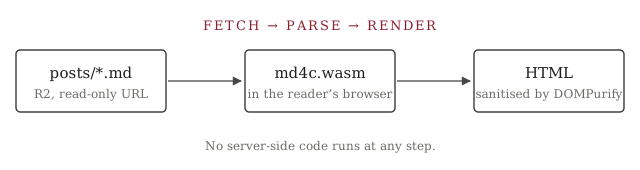
This blog has four layers, shown below from storage to screen.
MD4C as WebAssembly
The C parser and HTML renderer from src/ are compiled with plain
clang --target=wasm32. A tiny freestanding libc (wasm/libc/) supplies
malloc, memcpy, snprintf and friends, so neither Emscripten nor a WASI
SDK is needed. The module is about 130 KB and exports one real function:
int md4c_wasm_to_html(const char* input, unsigned input_size,
                      unsigned parser_flags, unsigned renderer_flags);
A file system made of storagesdk
The native md2html reads and writes files with stdio. A browser has no
files, so wasm/js/md4c-fs.js provides readFile, readdir, renderFile
and friends on top of storagesdk.
In the browser it uses a read-only adapter that fetches files from a plain
public URL, such as a Cloudflare R2 bucket.
| Path | Contents |
|---|---|
index.json |
the list of posts, with title/date/tags |
posts/<slug>.md |
Markdown source with front matter |
Read-only for everyone but the owner
Visitors only ever see the bucket's public URL, which accepts reads and
nothing else. The owner publishes from their own machine with
scripts/publish.mjs, which writes through any storagesdk adapter (R2, S3,
a local folder, ...) using credentials only they have. Rendered HTML is
also cleaned by DOMPurify, under a strict Content-Security-Policy.
The blog itself
A few hundred lines of plain JavaScript: a hash router, a post list and a
post view. Its appearance — title, slogan, theme, colours, background image
— is configured in the site section of index.json.1
- Every post is rendered when you open it. MD4C is fast enough that this usually takes well under a millisecond.↩